
Everyday Aesthetics has emerged in the 21st century as a dynamic field of philosophical inquiry that shifts attention from art-centered approaches to the aesthetic dimensions of everyday life, practices, and environments. Initially concerned with defining its scope in relation to mainstream aesthetics, the field has progressively expanded, developing through a plurality of perspectives and contexts.
Over time, everyday aesthetics has grown into an increasingly international and interdisciplinary area of research. In Europe in particular, it has taken distinctive directions, engaging with topics such as environment, urban life, design, and forms of experience, and opening to diverse approaches, including phenomenological, historical, and critical perspectives.
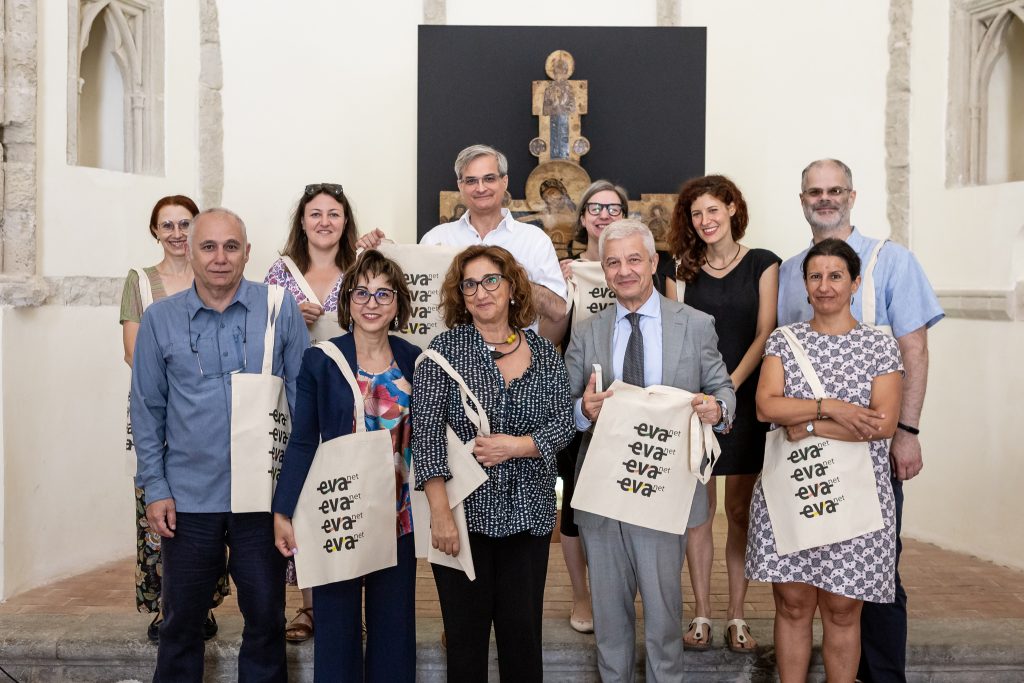
Within this evolving landscape, and in response to a “European turn,” a group of scholars established the Everyday Aesthetics Network (EVAnet) to foster collaboration, dialogue, and institutional coordination. Promoted by the University of Palermo, which continues to act as Institutional Reference Point, the network was formally launched in 2022 through a cooperation agreement among thirteen European institutions.
Since its foundation, EVAnet has significantly expanded its international visibility and membership. The network now includes a growing number of institutional partners represented in the Steering Committee, as well as an increasing community of Associate Members actively contributing to its research activities. It is further supported by the participation of distinguished scholars as Honorary Members (Arnold Berleant, Yuriko Saito, Thomas Leddy, Emily Brady), whose work has been foundational in shaping the field of everyday and environmental aesthetics.
Its scientific work has gained international recognition and is acknowledged in recent overviews of the field, such as Yuriko Saito’s updated entry “Aesthetics of the Everyday” in the Stanford Encyclopedia of Philosophy.
rk.
Everyday Aesthetics has emerged in the 21st century as a dynamic field of philosophical inquiry that shifts attention from art-centered approaches to the aesthetic dimensions of everyday life, practices, and environments. Initially concerned with defining its scope in relation to mainstream aesthetics, the field has progressively expanded, developing through a plurality of perspectives and contexts.
Over time, everyday aesthetics has grown into an increasingly international and interdisciplinary area of research. In Europe in particular, it has taken distinctive directions, engaging with topics such as environment, urban life, design, and forms of experience, and opening to diverse approaches, including phenomenological, historical, and critical perspectives.
Within this evolving landscape, and in response to a “European turn,” a group of scholars established the Everyday Aesthetics Network (EVAnet) to foster collaboration, dialogue, and institutional coordination. Promoted by the University of Palermo, which continues to act as Institutional Reference Point, the network was formally launched in 2022 through a cooperation agreement among thirteen European institutions.
Since its foundation, EVAnet has significantly expanded its international visibility and membership. The network now includes a growing number of institutional partners represented in the Steering Committee, as well as an increasing community of Associate Members actively contributing to its research activities. It is further supported by the participation of distinguished scholars as Honorary Members (Arnold Berleant, Yuriko Saito, Thomas Leddy, Emily Brady), whose work has been foundational in shaping the field of everyday and environmental aesthetics.
Its scientific work has gained international recognition and is acknowledged in recent overviews of the field, such as Yuriko Saito’s updated entry “Aesthetics of the Everyday” in the Stanford Encyclopedia of Philosophy.
